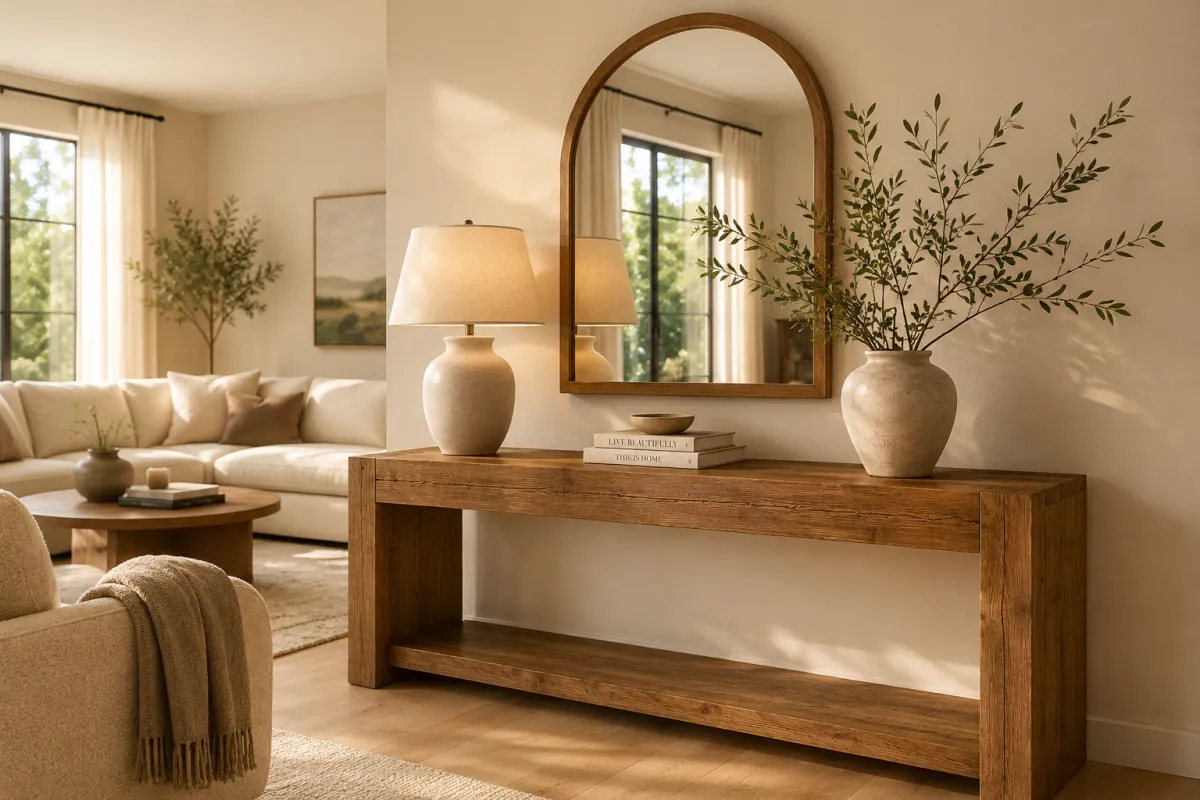
Console Table Decor Ideas: How to Style a Console Table Like a Designer
Disclosure: This article contains affiliate links.
Console table decor is one of those things that seems like it should be easy — and yet somehow it almost never comes together on the first try. You add a lamp, maybe a stack of books, and it still doesn't quite feel finished. Or you keep adding pretty things until the whole surface feels busy instead of styled.
I don't think that's because console tables are actually hard. I think it's because most of us have never been handed a simple formula to follow — just a lot of pretty photos with no explanation of why they work.
That's exactly what I want to give you today: the same simple three-piece formula I come back to every time, whether the console is tucked behind a sofa, pushed against a living room wall, or welcoming you in an entryway.
The Two Console Table Mistakes I See Most Often
Almost every console table problem comes down to one of two things: too empty, or too cluttered. Once you can recognize which one you're dealing with, the fix is actually pretty simple.
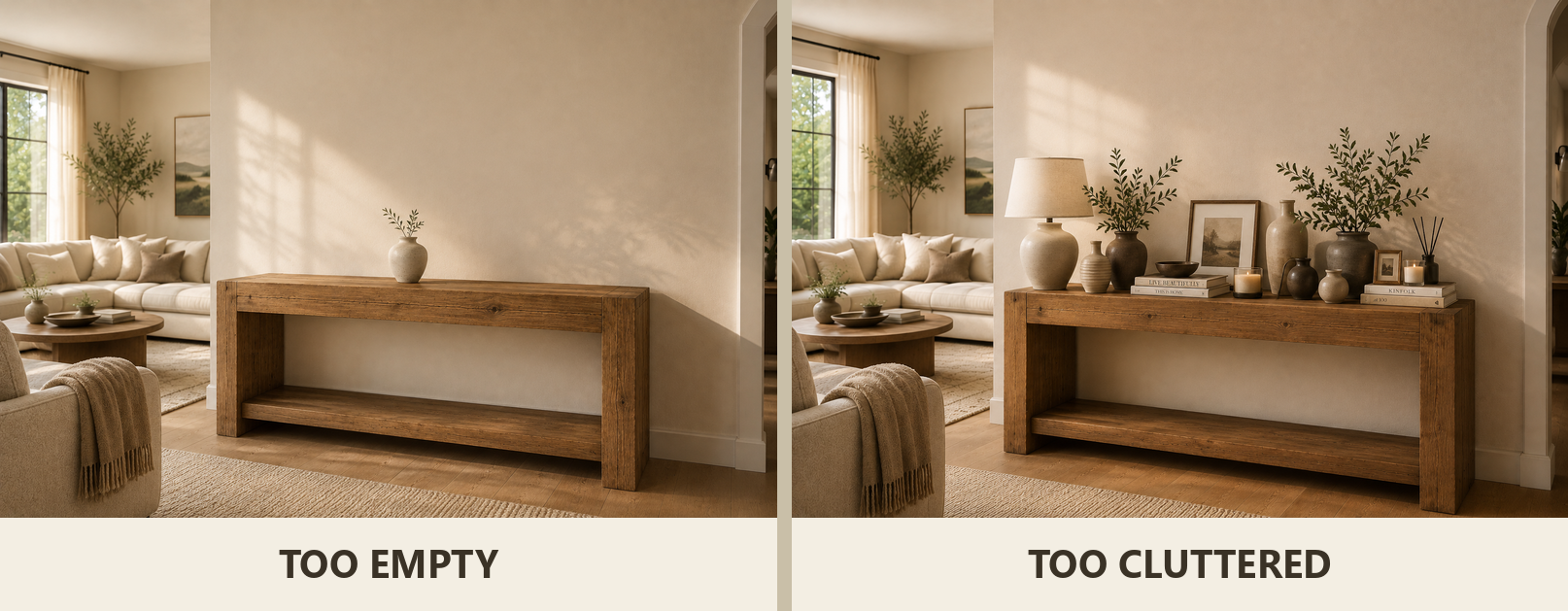
When It Looks Too Empty
This usually happens with one of two setups: either there's a single object sitting dead center on a long surface, or there's nothing there at all except maybe a lamp.
The problem isn't that empty space is bad — negative space is actually part of good design. The problem is that a single small object on a large surface reads as unfinished rather than intentional. Your eye doesn't know where to land, so the whole area feels like a work in progress instead of a finished vignette.
When It Looks Too Cluttered
The opposite mistake is just as common — a console crowded with lots of small objects that are all roughly the same height and size. Individually, every piece might be pretty. Together, they create what I'd call visual noise: your eye can't find a focal point, so the whole area feels busy instead of curated.
This is usually a sign that a console has been decorated by adding things over time, rather than styled with a plan in mind. It just needs a little editing.
The Simple 3-Piece Console Table Styling Formula
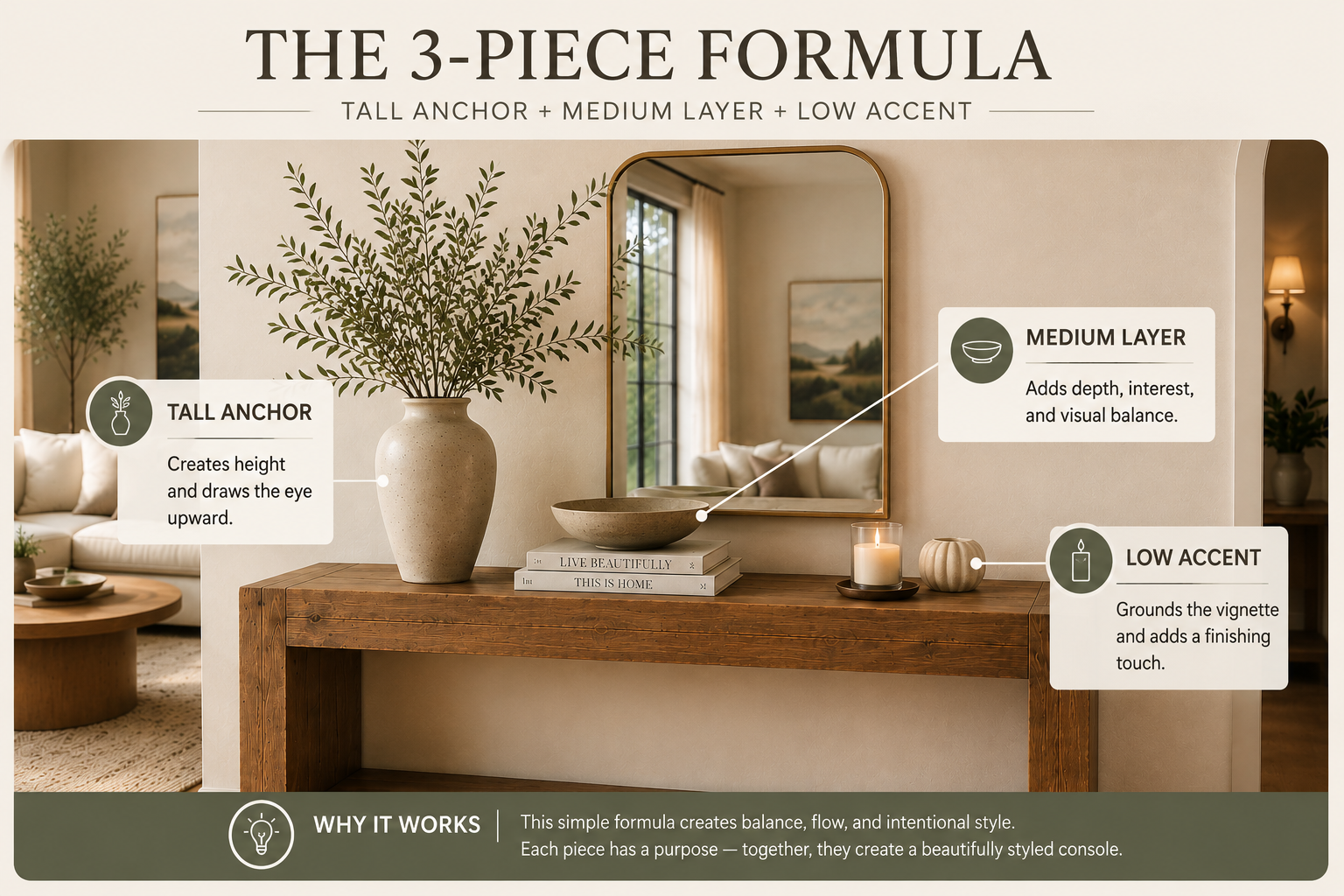
This is the console table styling formula I come back to every single time, and it solves both problems at once. Instead of counting objects, think in terms of three visual layers: something tall, something medium, and something low. That doesn't mean exactly three items, though — a layer might be a single lamp, or it might be a small cluster of two or three pieces grouped at a similar height. What matters is that your eye has a clear tall moment, a clear medium moment, and a clear low moment to move through, not that you count out exactly three objects.
The Tall Anchor Layer
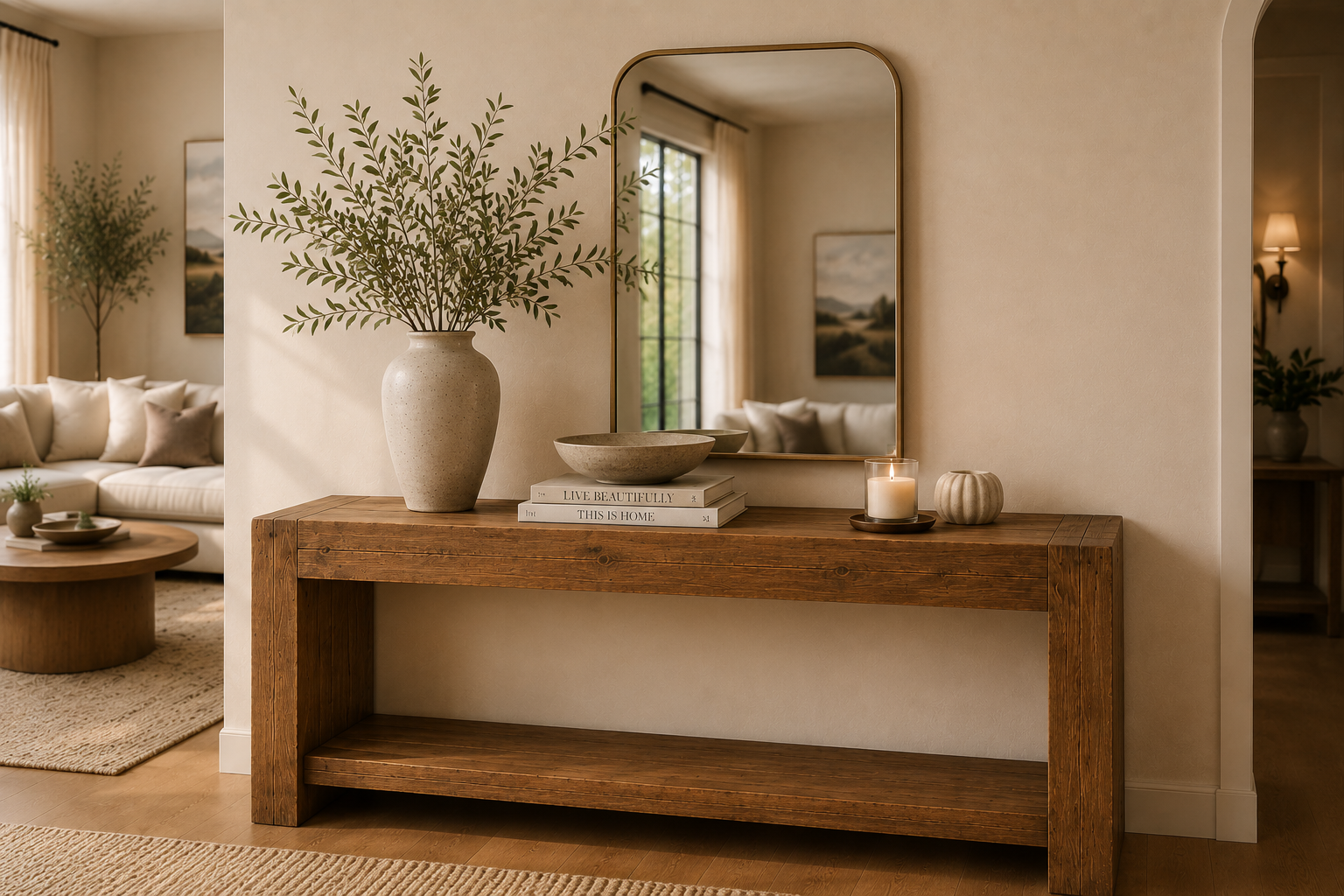
Start with one taller layer that anchors the whole arrangement — a table lamp, a piece of art leaning against the wall, or a tall vase with branches. This is what your eye lands on first, so it should feel like the obvious starting point rather than competing with everything else around it.
The Medium Grounding Layer
Next, add something with a bit of visual weight that sits lower than your anchor layer — a stack of a few books, a substantial vase, or a decorative bowl. This is what grounds the arrangement and keeps it from feeling top-heavy.
The Low Functional Layer
Finish with something practical and low — a tray for catching keys and mail, a small dish, or a lidded box for the things you don't want on display. This is the layer that makes your console table actually useful, not just decorative, and it's usually what keeps the whole surface from slowly turning back into clutter.
A quick note: this formula works with almost any combination of pieces you already own. You don't need to buy anything new to try it — start by rearranging what you have into these three layers before you decide what, if anything, is actually missing.
This is really just a more specific version of a principle I come back to throughout an entire living room — you can read more about styling in layers instead of singles in 7 Interior Designer Secrets That Instantly Elevate Your Living Room.
How to Choose the Right Console Table for Your Space
Before you can style a console table well, it helps to have the right one for where it's going. A console table that works beautifully in an entryway can feel completely wrong behind a sectional, and vice versa.
Behind a Sofa or Sectional
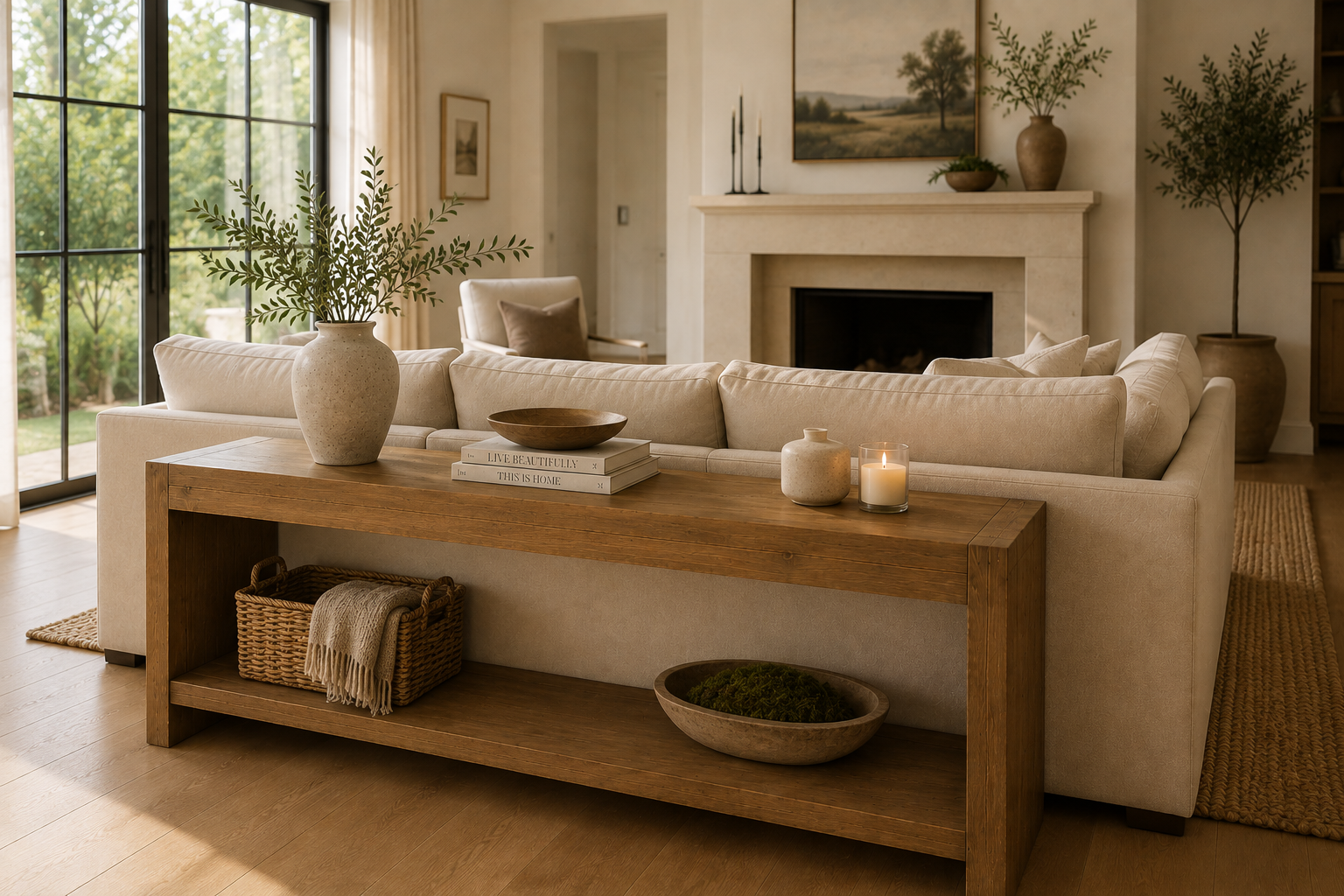
When you're placing a console table behind a sofa or sectional, a general guideline I like to use is choosing one that sits at or just slightly below the height of your sofa's back. If the console rises above it, your eye tends to catch on the table before it reaches anything behind it, which can make the area feel a little disjointed rather than connected.
Depth matters too — a narrower console tends to leave better flow behind a sofa than a deep one, especially if there's a walkway back there. If you want a budget-friendly way to try the whole look before committing to something bigger, the Lantine console has a slim profile that works especially well in this type of placement — it's an easy, affordable way to find out whether you love having a console there at all.
If you're working with a sectional specifically, I've written a full guide on styling a sectional that pairs well with this one. And if you're still choosing your sofa, my favorite timeless sofas are a good place to start.
The Budget-Friendly Pick
Target · Shop →
Against a Living Room Wall
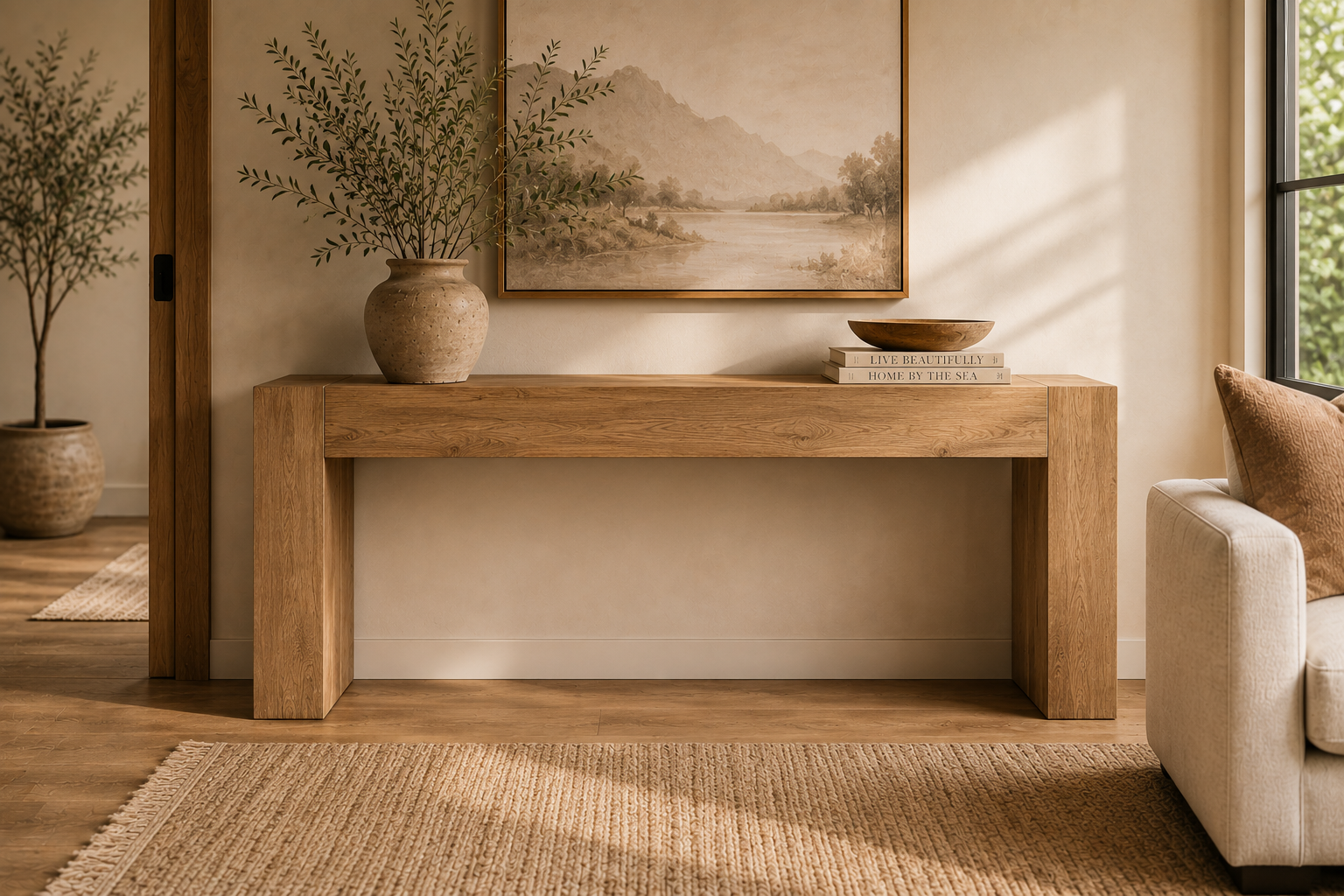
A console table against an open wall has more flexibility, since it doesn't need to relate to a specific piece of seating. This is a great spot for a slightly wider or more sculptural table — it can become the visual anchor of that whole side of the room rather than a supporting piece behind the sofa.
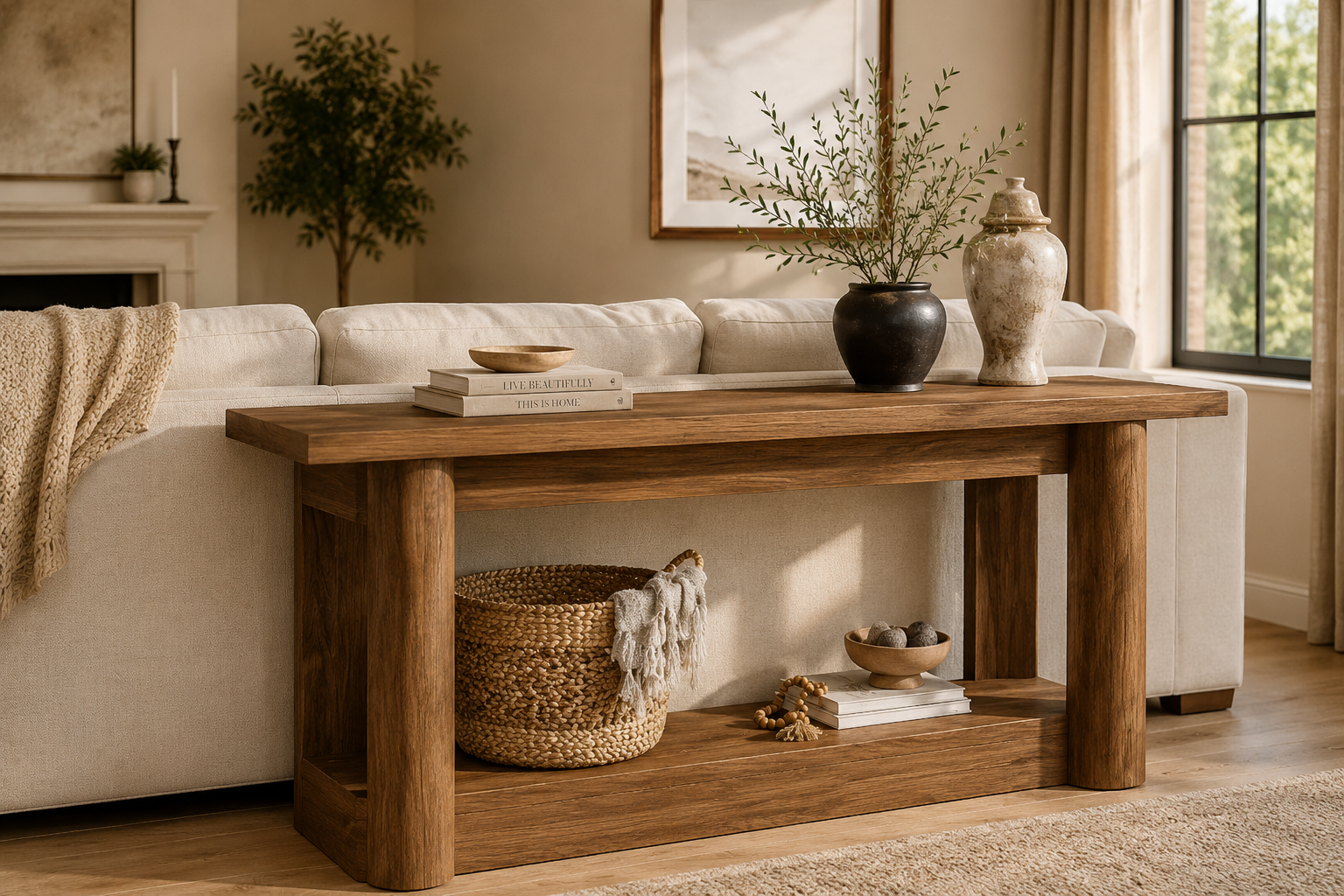
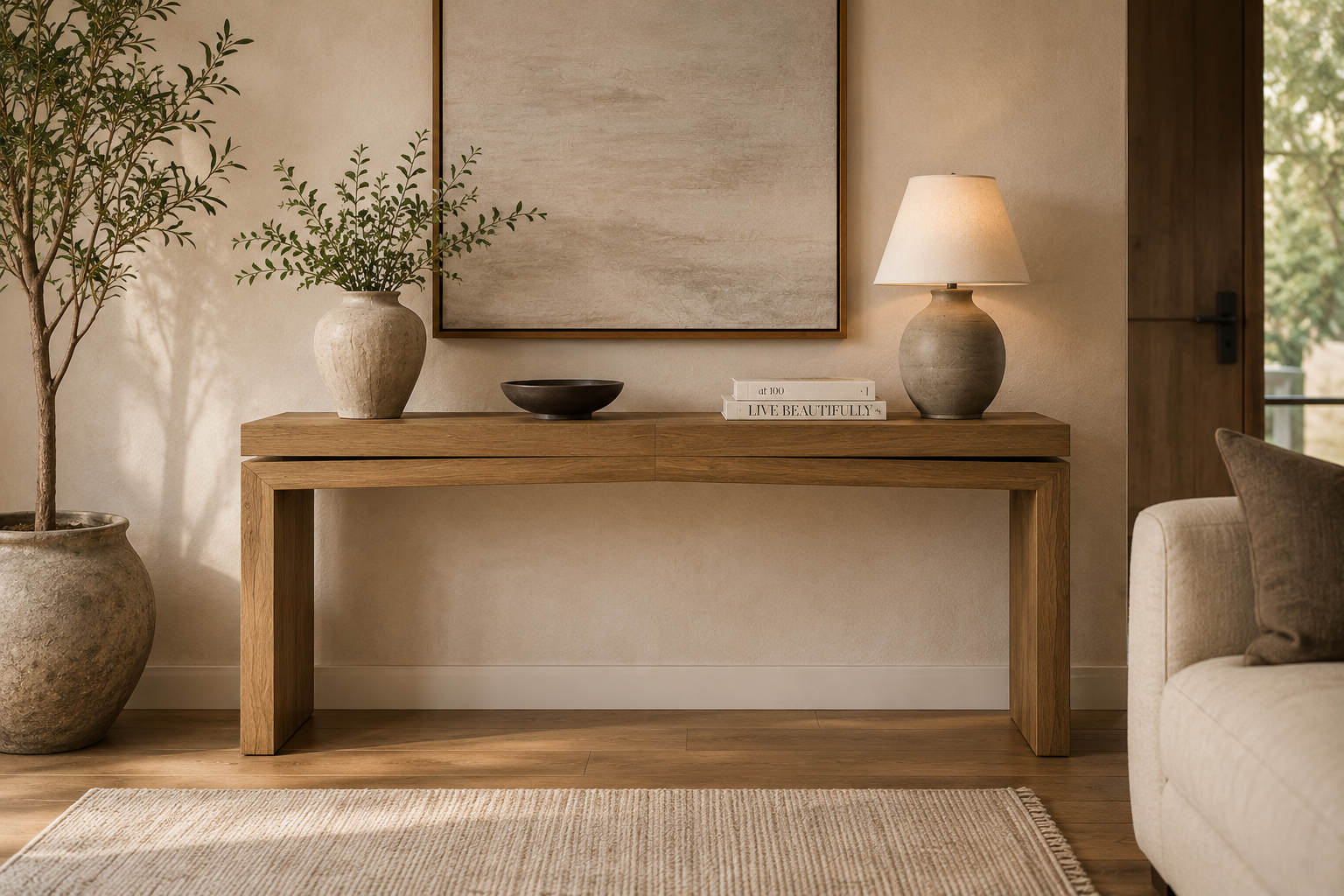
This is really where you get to choose your own style direction, since there are two ways I'd go depending on your taste. If you're drawn to something with real weight and history to it, a piece like the Brissy console — reclaimed oak with the joinery left exposed — reads as a genuine investment piece, the kind of thing that anchors a room for years. If your taste leans more sculptural and organic-modern, something like the Matthes console, with its offset waterfall silhouette in reclaimed wood, makes more of a design statement while still keeping that warm, collected feel. Neither is more "right" than the other — it really comes down to which one feels like your home.
Because there's no sofa or sectional doing the work of anchoring this arrangement, the wall above the console has to work a little harder. I always make sure there's one strong vertical or focal element above it — a piece of art, a mirror, a taller lamp, or even a branch arrangement with some height — so the whole grouping reads as one connected moment on the wall instead of a low table floating under a lot of empty space.
The Investment Piece
Kathy Kuo Home · Shop →
The Sculptural Statement
Perigold · Shop →
In an Entryway or Hallway
In an entryway or hallway, function tends to matter as much as style. I always think about what actually needs to happen at this table every day — keys getting dropped, mail getting sorted, shoes getting put on — and choose a console that can hold that daily traffic without feeling cluttered five minutes after you style it.
If you like a cleaner, more architectural look, an open-shelf design like the Casa console is a nice option here — the lower shelf gives you a spot for a basket or two, so the everyday clutter has a home without sitting out on top.
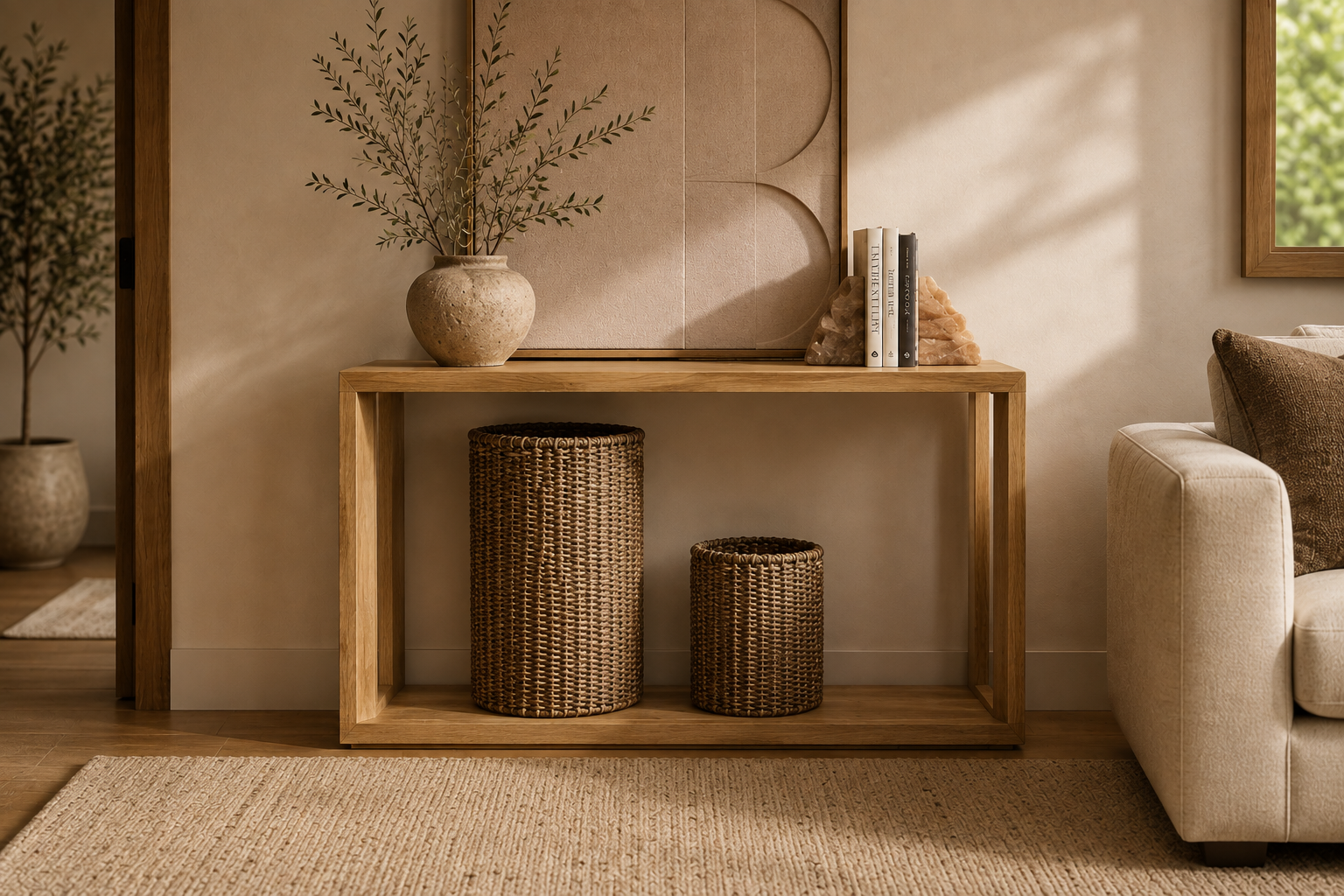
The Clean, Organic Modern Pick
Castlery · Shop →
Mirror or Art Above the Console?
Once your console table itself is in place, the wall above it is one of the easiest ways to finish the whole look.
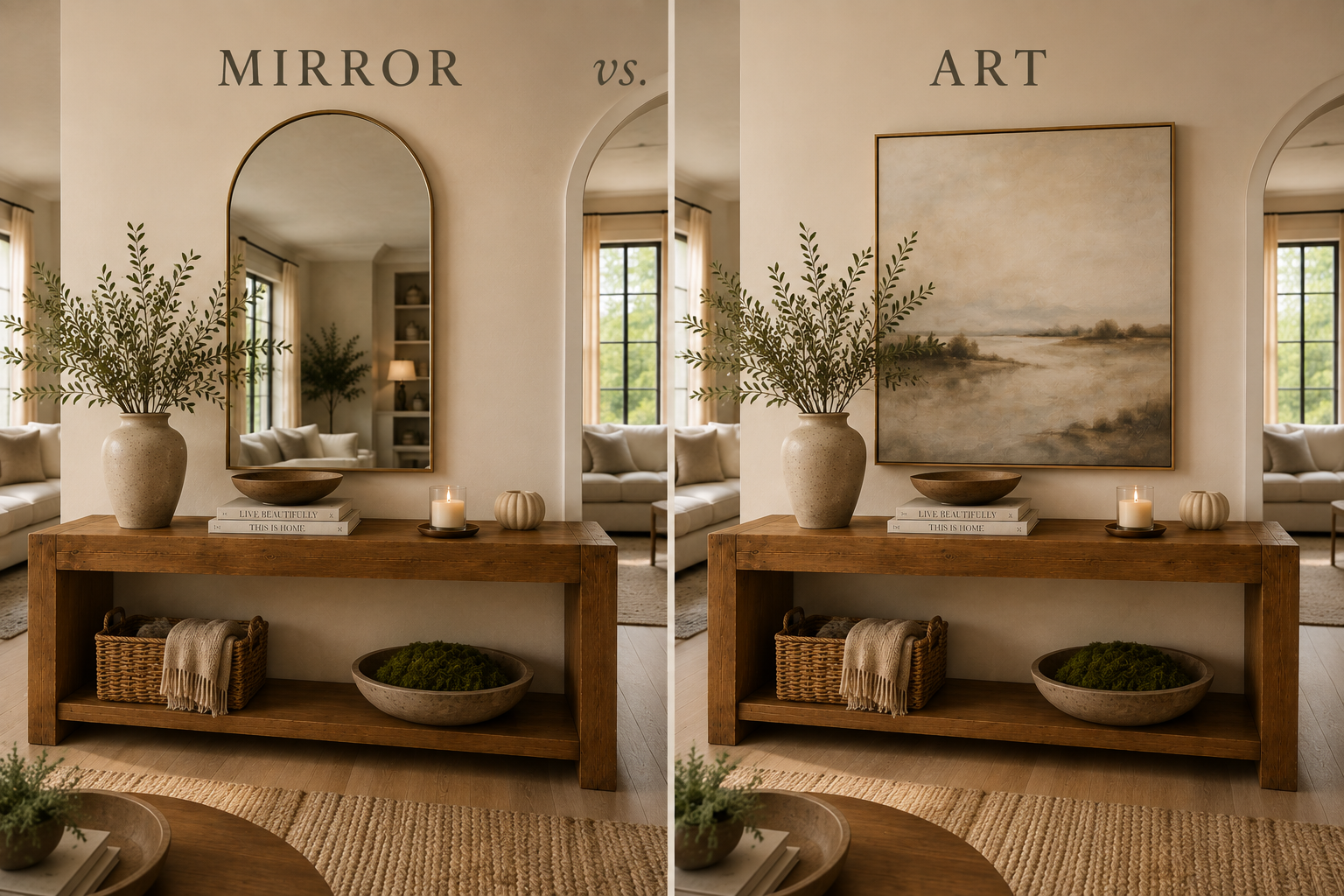
Here's how I actually decide. If the space feels dim, narrow, or like it needs to feel a little bigger than it is — an entryway, a hallway, a living room wall that doesn't get much natural light — I'll almost always reach for a mirror. It bounces light back into the room and makes the whole area feel more open, which is an easy way to make a smaller space feel less closed-in.
If the room already feels bright and open, or if I want that spot to feel more like a design moment than a functional one, I'll choose art instead. Art is what gives a console its personality — it's the piece that makes the vignette feel like your home rather than a formula anyone could recreate. I especially love one oversized piece here rather than a small one, since it fills the wall with a lot more confidence.
There's no rule that says you have to pick one over the other forever — but as a general guideline, I like leaving a few inches of breathing room between the top of the console and the bottom of whatever's hanging above it, so the two pieces feel connected rather than like they're competing for the same space.
If you're leaning toward a mirror, something like the Williams Arched Oak Mirror is a good example of what I mean — a clean, solid-wood arch with enough simplicity that it works whether your console leans traditional or more modern.
Layer in Lighting
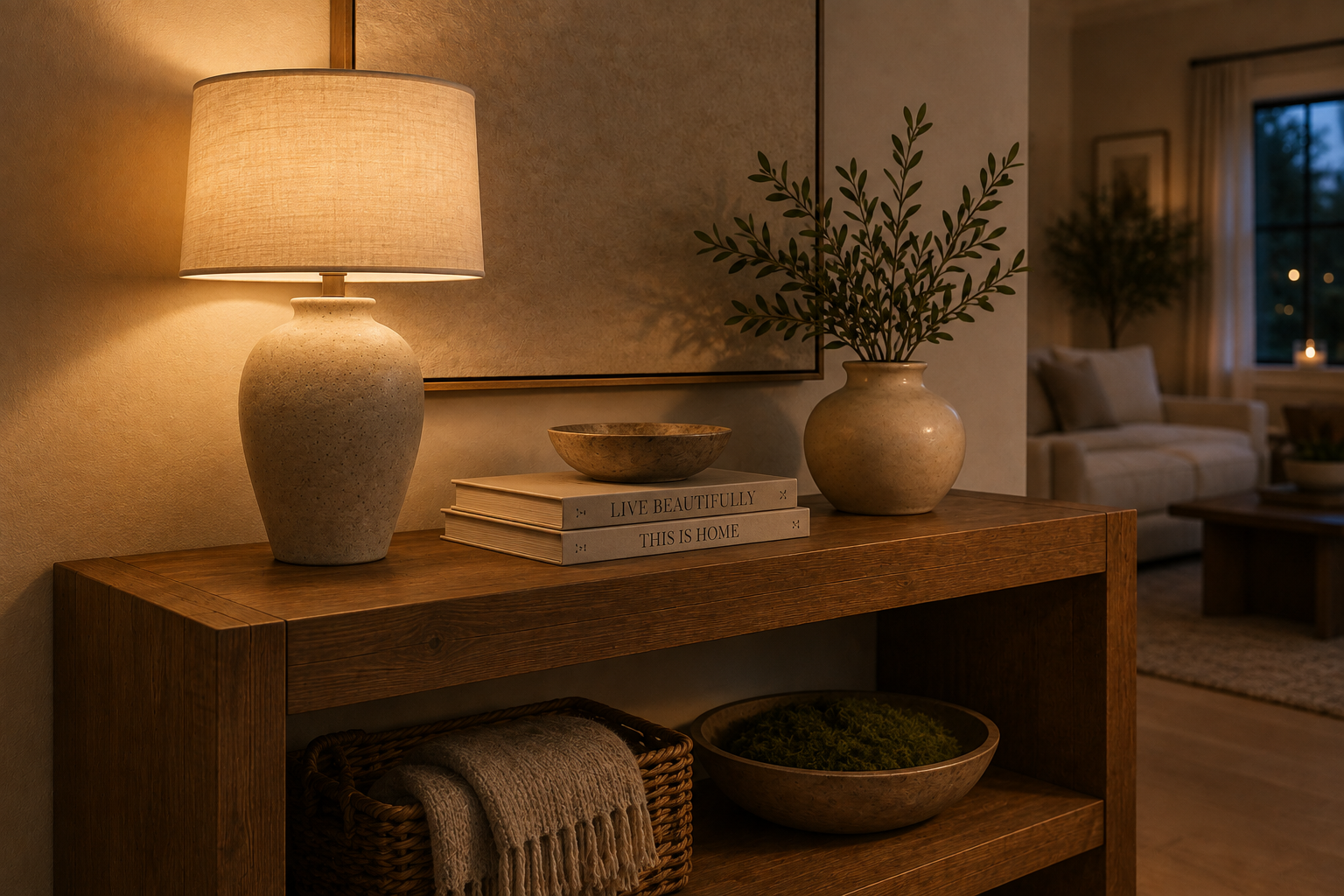
A console table is one of the easiest places in a living room to add another layer of light, and it's a step I don't like to skip.
A single table lamp on your console does double duty — it's usually your tall anchor layer from the formula above, and it adds warm, ambient light to a part of the room that overhead lighting alone often misses. If you want to go deeper on lighting layers throughout your whole living room, I've written a full guide on that: Living Room Lighting Ideas.
Frequently Asked Questions
How tall should a console table be behind a sofa?
A commonly used general guideline is to choose a console that sits at or just slightly below your sofa's back height, so it doesn't interrupt the sightline across the room. There's no single official rule, though — if you love a slightly taller piece for a specific look, it can still work well in the right room.
Should I use a mirror or art above a console table?
Either works beautifully — it really comes down to what you're trying to achieve. A mirror helps bounce light and make a space feel larger, while art adds more personality and color. Choose whichever fits the mood you want for that part of the room.
How many things should go on a console table?
There's no fixed number of objects — what matters more is having three visual layers: a tall moment, a medium moment, and a low moment. Sometimes that's exactly three objects, and sometimes one of those layers is a small grouped cluster of two or three smaller pieces. As long as your eye can find all three layers, the arrangement will feel balanced no matter how many individual objects are actually on the table.
What's the difference between a console table and a sofa table?
The terms are often used interchangeably, though a sofa table generally refers specifically to a narrow table placed directly behind a sofa, while a console table is a broader category that also includes entryway and wall-anchored pieces.
Final Thoughts
A console table is a small piece of furniture, but it says a lot about how intentional the rest of your room feels. Once you start thinking in terms of tall, medium, and low instead of "what looks nice," styling it becomes so much easier — and it's a formula you can reuse anywhere in your home, not just on a console table.
Start with what you already own, edit down if things feel cluttered, add if things feel empty, and don't be afraid to let it evolve over time. That's how the best-styled rooms actually happen.
Continue Designing Your Living Room:
- Living Room Lighting Ideas
- How to Style a Sectional Like an Interior Designer
- The Designer Edit: 15 Timeless Sofas
- 7 Interior Designer Secrets That Instantly Elevate Your Living Room
- Coffee Table Styling: 5 Foolproof Formulas
Love a well-styled console table and beautifully finished living room details?
Follow us for more home decor inspiration, designer styling tips, room makeovers, mood boards, and curated furniture finds that help you create a warm, inviting home you'll love:
- 📸 Instagram: @invitinghomedecor
- 🎵 TikTok: @invitinghomedecor
- 👍 Facebook: Inviting Home Decor
- ▶️ YouTube: @invitinghomedecor
From styling formulas and console table decor to designer-approved furniture layouts and complete room inspiration, we share practical decorating tips and thoughtfully curated home finds that help you create a home that's comfortable for everyday living and beautiful enough to look professionally designed.
Disclosure: This article contains affiliate links. If you purchase through one of these links, I may earn a small commission at no additional cost to you. I only share products I truly love and believe will help you create a beautiful home.
Inviting Home Decor helps you create a beautiful, designer-inspired home with carefully curated decor, furniture, and styling ideas. We share room inspiration, shopping guides, and practical decorating tips to make your space feel warm, inviting, and timeless. Discover affordable ways to achieve a high-end look you'll love coming home to.